
Colfax County Crime News Sources
Official Colfax County sources cover only part of the picture. The Sheriff's Department keeps a contact page plus links to old monthly blotters. The Vigil-Maldonado Detention Center posts facility details. Neither one offers a live roster, a current booking feed, or photos. Keep that gap in mind whenever a paper or radio station reports an arrest.
For ongoing coverage, KRTN carries the most frequent public-safety reporting in the county. Its Colfax Sheriff and Raton Police categories run arrests alongside traffic stops, calls, citations, incidents, and wrecks. The Ratonian kept police-blotter material until it announced closure in April 2026. Those posts read as history unless publication returns. The World Journal pitches in with occasional arrest and court stories, some behind a paywall. Context lives here, not the official detention record.
The KRTN Colfax Sheriff blotter archive offers dated local reporting, entry by entry.
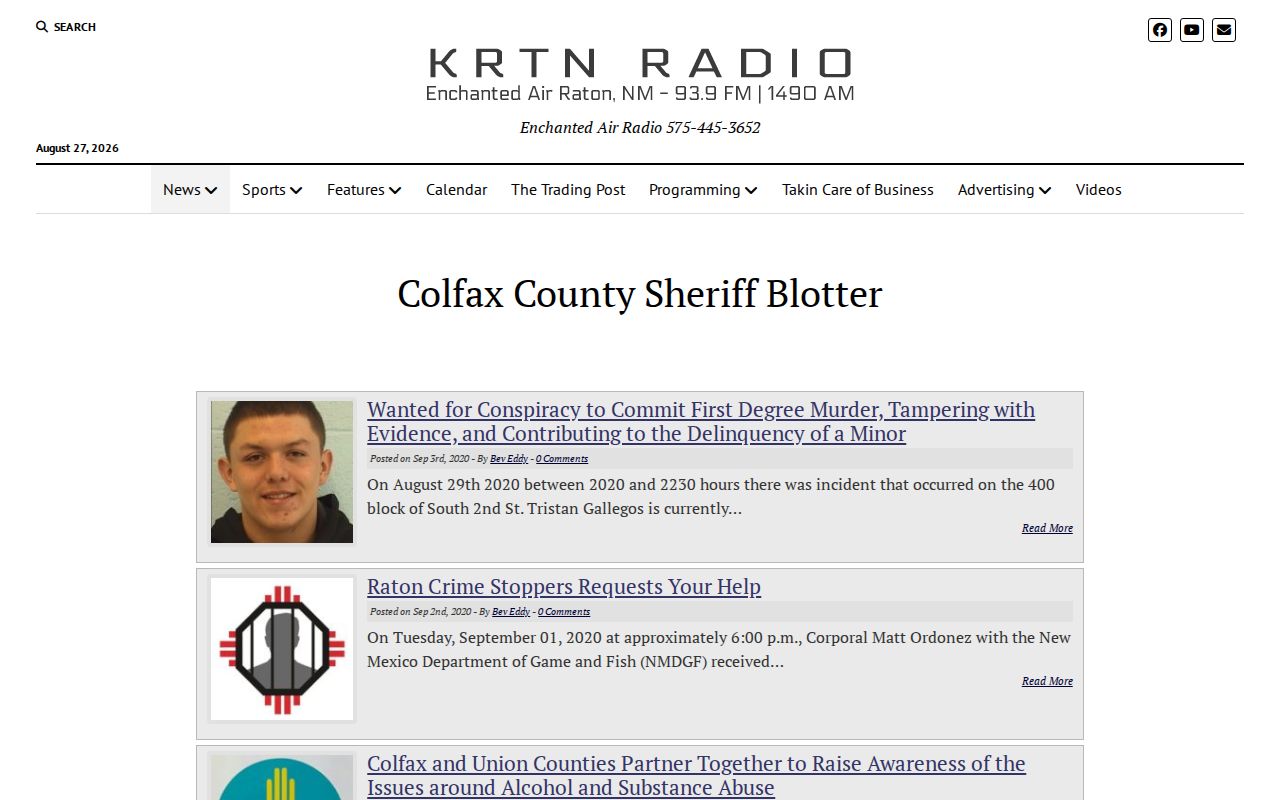
Read each entry by its source date and record type. The archive is not a live jail list.
Colfax County News Outlet Records
The table keeps the publisher separate from the agency holding the actual record. A story can quote a release correctly yet still miss a transfer, a dismissal, a correction, or a later ruling from the court.
| Outlet or source | Coverage | Photographs | How to use it |
|---|---|---|---|
| Colfax Sheriff historical blotters | Official archived monthly activity | No routine current photo source verified | Use as historical source material with its month and date |
| KRTN Raton Police Blotter | Recurring local Raton Police reporting | No routine booking-image practice located | Use the named agency and date to seek a primary record |
| KRTN Colfax Sheriff category | Sheriff material, incidents, citations, and arrests | Occasional article images only | Local reporting, not a county feed |
| The Ratonian archive | Historic law-enforcement and blotter posts | No current archive promise | Archive context, subject to its changed publication status |
| World Journal | Occasional local arrest, court, and detention reporting | No dedicated mugshot archive verified | Context and source discovery, sometimes subscription-limited |
| Mugshots.com Colfax page | Historic third-party county entries | Older indexed images | Unofficial secondary material, never current-custody proof |
Among third-party sites, only the Mugshots.com county page checked out. Busted Newspaper, RecentlyBooked, Arrests.org, and Mugshots.zone had no verified Colfax-local page at all. Don't guess a county URL from a state index or another county's branding. The one verified page leans heavily historical. Most entries cluster in older years, and the page shows no official tie to the county.
Colfax County News Photo Context
Every local photo needs a source and a date. In a 2024 shooting story, KRTN labeled an image as a mug shot and credited a Colfax County Sheriff release. That is agency-sourced photo journalism, plain and simple. It does not prove the sheriff or VMDC hands out booking photos on request, and it does not make any media archive complete. The image belongs with its article, its date, and its stated attribution rather than in a separate person index.
New Mexico's public-record rules draw their own lines through exemptions, redactions, juvenile protections, active matters, sealing, and expungement. Under Rule 10.2.2 NMAC, photographs and booking sheets both count as arrest records, and the rule spells out how expungement changes public access. What a publisher shows you says nothing about whether the originating office still holds the image as current, accurate, or public.
Important: Confirm case status with the court and the original agency before relying on any published report.
The dated KRTN article is the source behind this one published-image example.
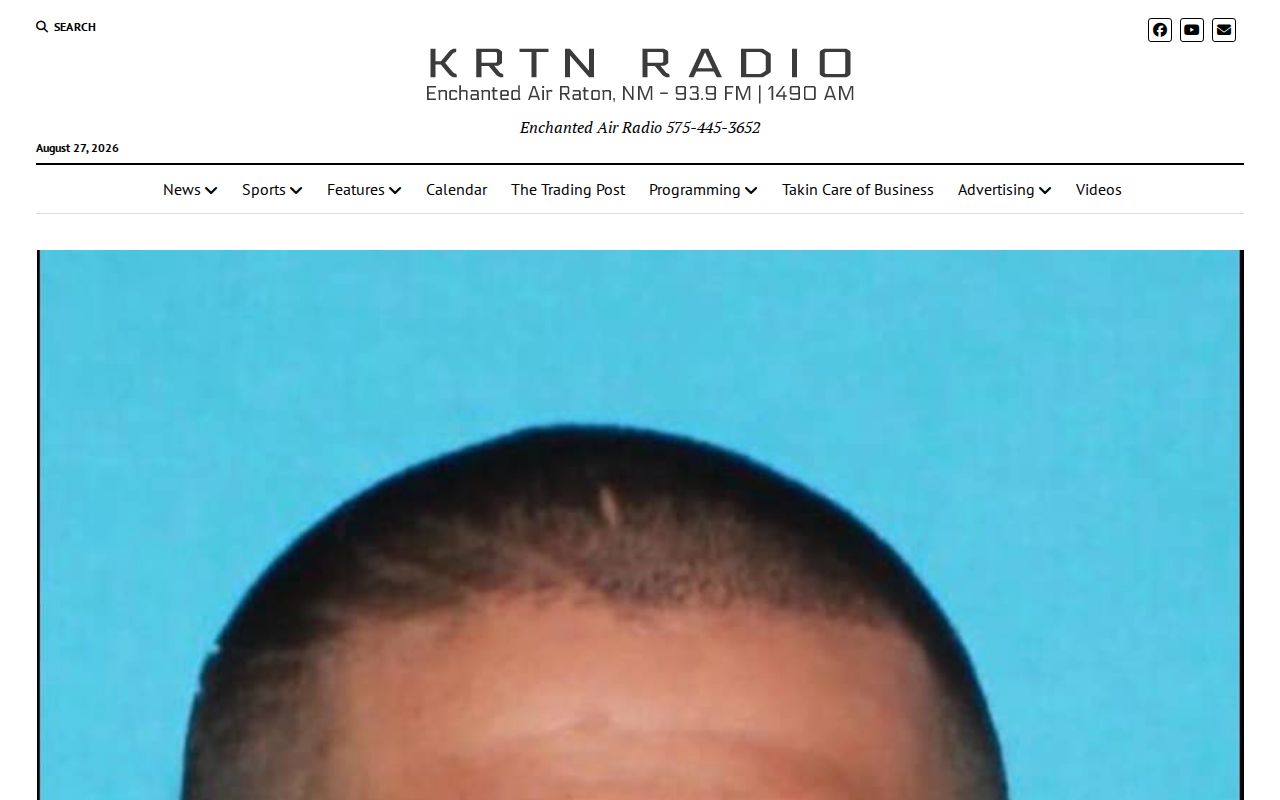
Its value lies in the date and the attribution. It does not reveal county booking-photo policy.
From Colfax County News to Records
A news story can point you toward a record. Start with two things: which agency handled the event, and when it happened. Those details unlock the official trail. A headline alone will not do that. Articles may mention a citation, a warrant, a booking, or a court date. Each term means something different, and each leads somewhere different. The steps below walk from the news item to the official record that actually answers your question.
- Record the publisher, original publication date, agency named, and the article’s exact record type.
- Check the official sheriff, municipal police, or state agency contact for the original release or a records route.
- For possible current local custody, verify with VMDC or the arresting agency. There is no public Colfax County roster to replace that step.
- Use New Mexico Courts Case Lookup to locate a case by exact name or number, then confirm limits with the court clerk.
- Use a focused IPRA request if the needed report or booking record is not publicly posted, and preserve the agency’s response.
The Colfax County booking-record path lays out the full county sequence, including the split between local detention, state custody, court records, and federal channels. One news story will never cover all of that.
Colfax County Blotter Labels Matter
Colfax County's older sheriff material and KRTN posts stir several kinds of public-safety information together. A citation, accident, call, or incident line does not equal a booking. Someone might also have been booked without ever showing up in a given archive. So keep labels plain: "arrest reported by KRTN," "historic sheriff blotter," "court case," or "VMDC verification." A broad label only blurs the differences.
Raton draws the heaviest recurring coverage. The Raton Busted Mugshots page covers the local police contact and the KRTN/Ratonian split. Angel Fire's historical booking report and Springer's state-prison boundary call for different handling. That is why the city pages avoid one shared news pattern.
Note: A dated public report can stay searchable long after its custody details or case description have changed.
Colfax County News Corrections
A correction starts wherever the record began. If the error sits in an agency file, reach out to the police department, the Colfax County sheriff, the VMDC custodian, or the court that holds it. Some errors call for a formal remedy instead. New Mexico offers two paths: the New Mexico Courts expungement information and the Department of Public Safety route. Fixing a government record is one thing. Getting a publisher or search engine to refresh its copy is another, and the second request depends on the first.
Local news matters too. When an agency release vanishes from its site, a news story may be the only remaining account of a booking or an arrest in Colfax County. Still, reporting can flatten a charge into a short phrase or reuse an outdated photo. So keep the pieces together: the original publication date, the agency credited, and any court follow-up. That habit treats public-record navigation and a final judgment as the very different things they are.
Before relying on a report, note a few facts. Who published it, when the event happened, when the article ran, which agency was named, and what kind of record it described. Check whether an image came from an agency source. See whether the story mentions a booking, a court date, a release, or just a reported arrest. If a correction ran later, keep it attached to the original item. That small paper trail stops an old headline or photo from hardening into a person's lasting status.